

The Starter Home That’s Not A Trap:
Should I Buy A Starter Home?

For many first-time buyers in Waterloo Region, a “starter home” can feel like a compromise - something small, older, or less polished than the dream home you envision. But the right starter home isn’t a trap. In fact, it can be a strategic launchpad that builds equity, gives you options, and sets you up for your next move.
Here’s how to spot a starter home that ages well and appreciates with you.
Look for Features That Age Well
Not all small or older homes are created equal. Some have structural or lifestyle features that stand the test of time, no matter what’s trending on Instagram.
Key features that hold value:
Separate Entrances
A side or basement entrance can open future possibilities - finishing a basement, adding a secondary suite (with proper permits), or simply providing privacy for guests or workspace. Even if you don’t plan to use it right away, buyers love flexibility.
Parking That Works Year-Round
Driveways, carports, or garage space remain a premium in Kitchener, Waterloo, and Cambridge. In neighbourhoods where street parking is limited or winter rules apply, dedicated parking is a major long-term asset.
Natural Light
Good windows and bright exposures make even smaller homes feel bigger. Light is one of the easiest features to market when you sell - and one of the hardest to add later.
Storage That Makes Daily Life Easier
Closets, utility rooms, sheds, and basements are often overlooked, but they make a home functional. Storage isn’t flashy, but it’s always in demand.
The more of these “timeless features” your starter home has, the better it will serve you - and the more appealing it will be to future buyers.
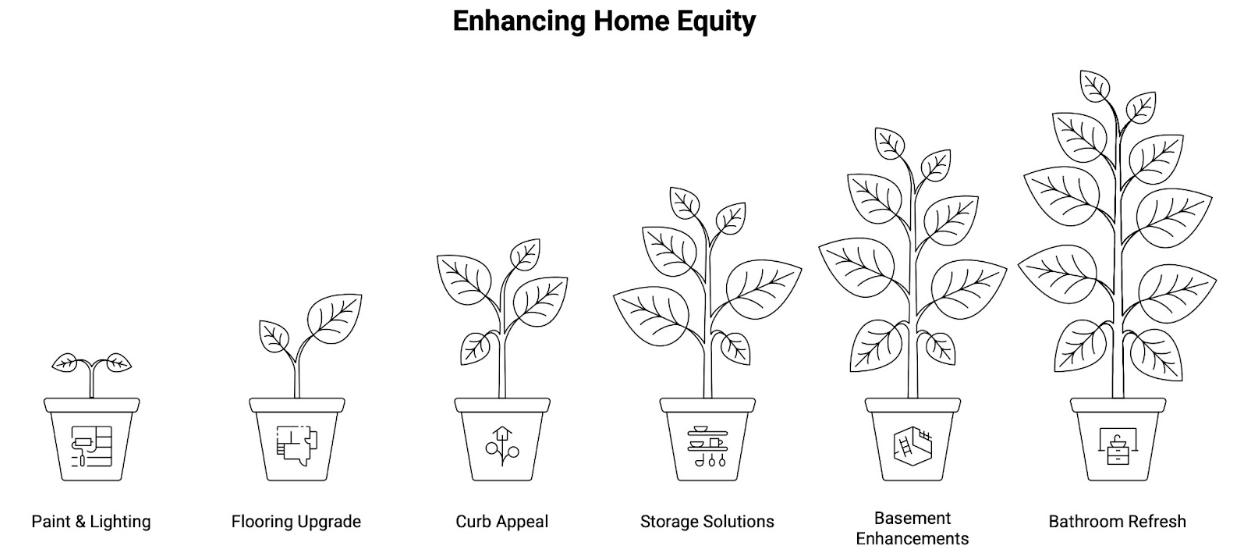
Choose a Home With Easy, High-Impact Equity Add Opportunities
You don’t need a full gut renovation to grow your equity. The best starter homes offer realistic, beginner-friendly improvement projects that increase value without draining your budget.
Low- to Moderate-Budget Equity Add Ideas:
Paint + lighting updates: Instantly refreshes the home and modernizes the feel.
Replace flooring in key areas: Upgrading entryways or living spaces goes a long way.
Improve curb appeal: Mulch, shrubs, modern house numbers, or a painted front door.
Open up storage space: Add shelving, organizers, or convert unused nooks.
Basement enhancements: Even small improvements like drywalling, better lighting, or creating a dedicated workspace add perceived square footage.
Bathroom refresh: New vanity, mirror, lighting, and hardware can transform the space without touching plumbing.
These projects allow you to increase value over time, even if the home isn’t perfect on day one.
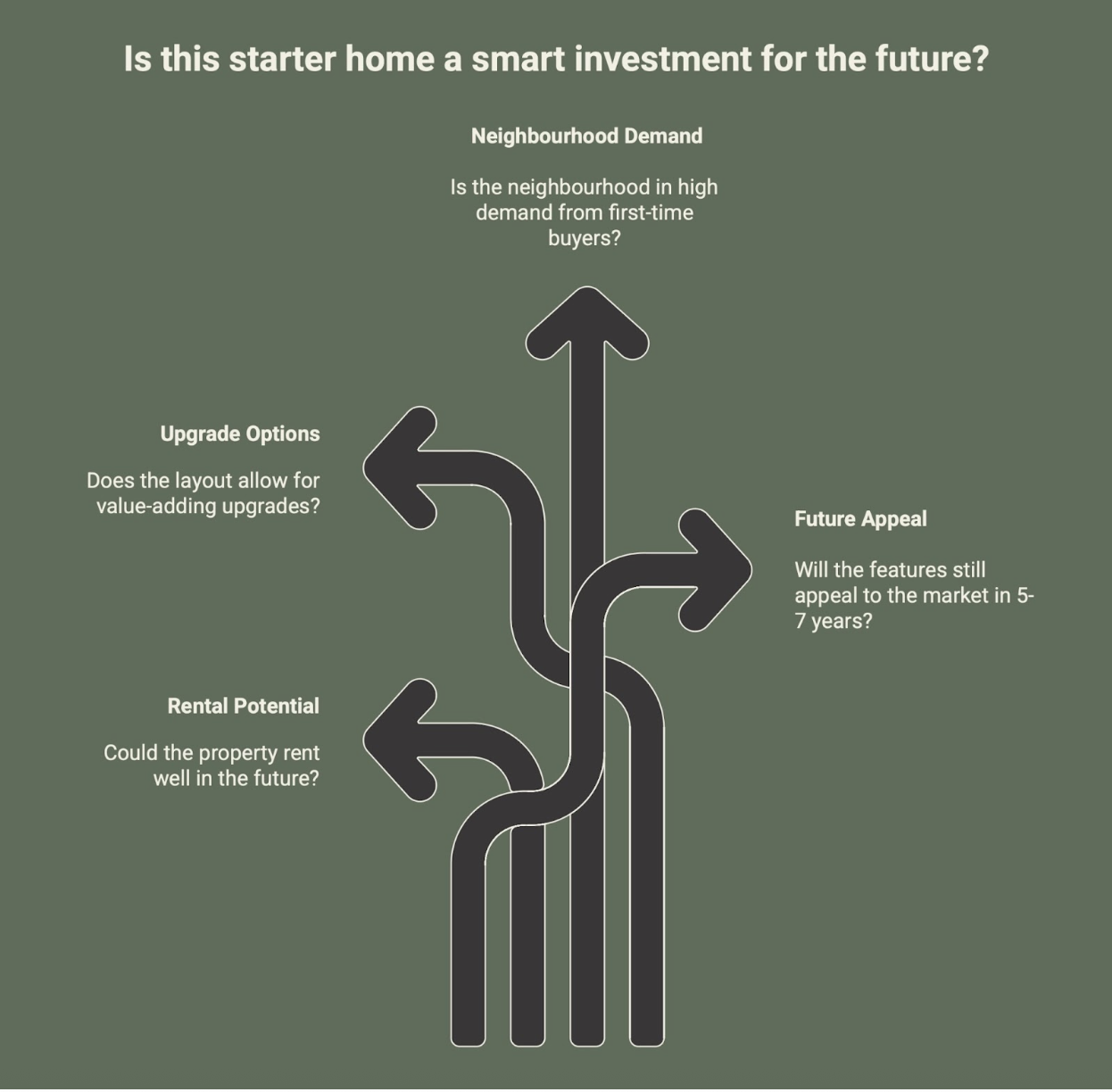
Think About Your Exit Strategy Before You Buy
A smart starter home doesn’t box you in - it gives you options.
Before making an offer, consider how this home can support your next step, whether that’s upsizing, investing, or eventually selling.
Questions to ask yourself:
Could this property rent well in the future, if needed?
Does the layout allow for value-adding upgrades or basement finishing later?
Is the home in a neighbourhood with strong demand from other first-time buyers?
Would the features still appeal to the market in 5–7 years?
Thinking ahead protects you from getting stuck and ensures your first purchase becomes a stepping stone, not a stopping point.
A Quick Example
Imagine you’re choosing between two similar-priced starter homes in Kitchener:
One is fully updated but has a mutual shared driveway, limited light, and no potential to expand. The other needs cosmetic updates but has a side entrance, a bright main floor, a single-wide private driveway, and a basement with future finishing potential.
Long term, the second home often wins because it grows with you and gives future buyers more reasons to say yes.
Ready to Talk Starter Homes?
If you’re exploring your first home purchase in Waterloo Region, the team at Bunker Realty can help you spot the homes that offer long-term value - not long-term limits.